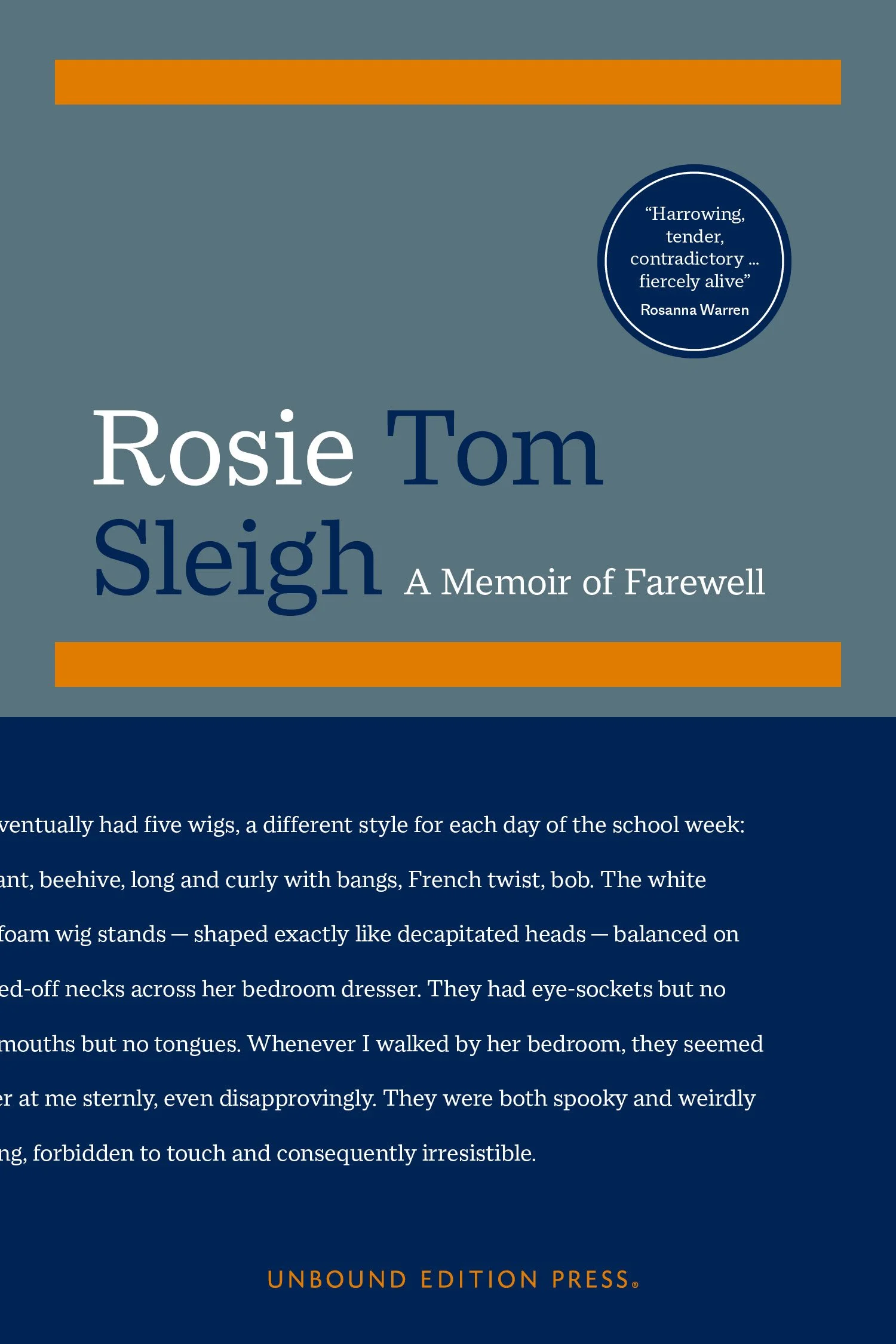
Rosie: A Memoir of Farewell
May 2026
In this luminous and unflinching memoir, acclaimed poet Tom Sleigh excavates the complex legacy of his mother Rosie — a brilliant English teacher who escaped dirt-poor Kansas through sheer intellectual force, only to struggle with the contradictions of motherhood and her own fierce independence.
From her white dog fur shroud to her final performance as she chose her own death at ninety-seven, Rosie emerges as both tender and terrifying, devoted and distant. Sleigh weaves together her own journal entries, family photographs, and his award-winning poetry to create a portrait that is simultaneously heartbreaking and darkly comic.
This is a book about words as weapons and balm, about the inheritance of trauma and brilliance, and about a son’s attempt to understand a mother who loved literature more than motherhood. With the precision of a surgeon and the heart of a poet, Sleigh has crafted a masterpiece of memoir that reads like a novel — urgent, honest, and utterly unforgettable.
Rosie is both elegy and reckoning, a work of devastating beauty.
Rosie: A Companion to the Memoir
Don’t miss this accompanying video series from Tom Sleigh and filmmaker Ed Robbins. The series features documentary vignettes narrated by Sleigh, as well as readings of his poems written for his mother.
Adam Haslett
“Love, honor, pity, pride, compassion, and sacrifice—all the great themes of literature that Faulkner enumerated in his famous Nobel speech are on vivid display in Tom Sleigh’s Rosie. Written in the immediate wake of his mother’s death, it hums with the freshness of the loss, as if its coruscating sentences might will her back to life. And the life the book describes is a quintessentially 20th century American one, that Faulkner himself would have recognized: from hardscrabble poverty to an incendiary marriage to a devastating accusation from one of her own sons later in life. The Rosie that Sleigh summons here is funny, infuriating, irresistible, and often wise, as is the book itself. Read it and weep.”
—Adam Haslett, winner of The Los Angeles Times Book Prize
Rosanna Warren
“Harrowing, tender, contradictory: Tom Sleigh has made a living portrait of his dead mother. Rosie is fiercely alive in these stark pages. Alive in her unhappiness, her outrageousness, her toughness, her affection, in the love of language she bequeathed to her poet son. This book starts with a vision of the mother’s corpse and ends with the death she insisted on, and for which she demanded her son’s help. This memoir is his tribute to her, a grim and loving truthfulness, and a gift to the English language.”
—Rosanna Warren
Linda Lowen
“Rosie is an irresistible literary memoir with a vibrant, easy-to-follow story . . .”
Read the full review in Hippocampus Magazine